Persian Gabbeh rugs are among the most expressive and culturally rich textiles in the world of traditional handwoven carpets. Crafted by tribal weavers from Iran—primarily the Qashqai and Luri tribes—Gabbeh rugs are known for their bold colors, simple yet evocative designs, and thick, plush pile. Each piece is a unique testament to nomadic heritage, often reflecting the personal stories, dreams, and environments of the weaver.
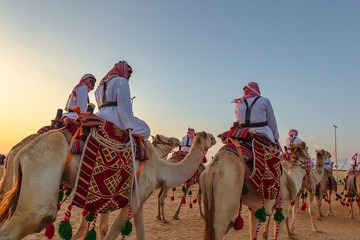
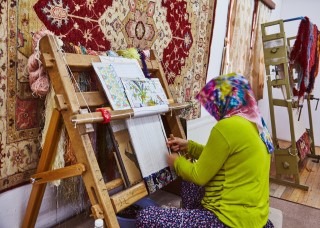
Gabbeh, meaning “raw” or “natural” in Persian, refers to the rug’s unrefined appearance and deeply rooted tribal authenticity. Gabbeh rugs trace their origins back over a thousand years to the Zagros Mountains of southwestern Iran. Traditionally woven by women, these rugs served practical purposes as floor coverings and bedding but simultaneously expressed the weavers’ artistic sensibilities.
The girls who learn to weave from their mothers were required to weave dowery rugs before marriage.
The asymmetrical designs and irregular patterns are not flaws but intentional elements, narrating folklore, rural life, and spirituality. Often passed down through generations, these rugs are considered family heirlooms and ethnographic artifacts.
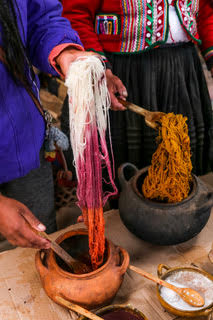
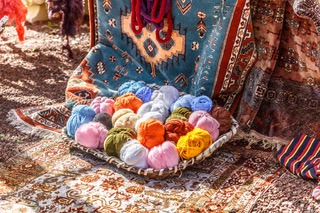
Authentic Gabbeh rugs are woven using handspun wool sourced from their very own sheep, giving each rug a soft, luxurious texture and natural sheen. The wool is dyed using natural materials—pomegranate rind, indigo, madder root, walnut husks, and flowers—resulting in organic and earthy color palettes that age beautifully over time.
Gabbeh rugs are known for their thicker, high-pile construction, sometimes reaching up to 1 inch in thickness. The weaving technique is typically coarse (40–100 knots per square inch), which gives them a rustic charm and robust durability.
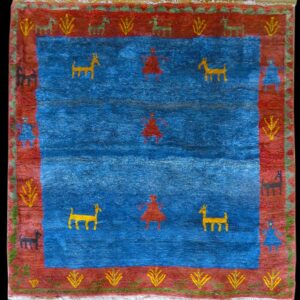
Designs often include minimalistic motifs—animals, trees, rivers, and abstract geometric forms—each bearing deep symbolic meaning. A lone tree may signify life; a pair of animals could represent companionship or fertility. Sometimes they even weave an image of themselves. The spontaneity of design ensures that no two Gabbeh rugs are ever alike.
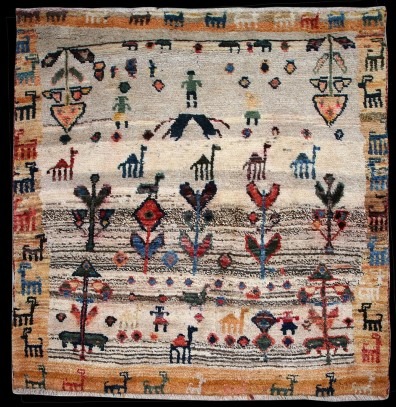
Woven by the Qashqai nomads, these are among the finest examples of Gabbeh craftsmanship. They feature bold, vivid colors and deeply personal symbols. Qashqai Gabbeh rugs often utilize a tighter knot density and are highly prized by collectors.
Created by the Lur tribes, Luri Gabbehs are slightly more subdued in color but equally rich in texture and symbolism. These rugs often use muted, earthy tones and carry a more subdued aesthetic, ideal for rustic or traditional interiors.
A sub-group of the Qashqai, the Kashkuli are known for producing the most refined Gabbeh rugs. Their work exhibits higher knot counts, detailed motifs, and a greater range of tonal variation, making them suitable for luxury settings.
Gabbeh rugs are incredibly versatile and complement various design styles—from modern minimalism to bohemian and farmhouse aesthetics. Their abstract and colorful patterns make them ideal statement pieces in both residential and commercial spaces.
Gabbeh rugs are made to withstand daily use, but proper care ensures their longevity.
Authentic Persian Gabbeh rugs are increasingly rare as tribal weaving practices decline due to modernization. Their handmade nature and cultural significance make them valuable investments. Older Gabbehs, particularly those made pre-1980s, are now sought-after collector items.
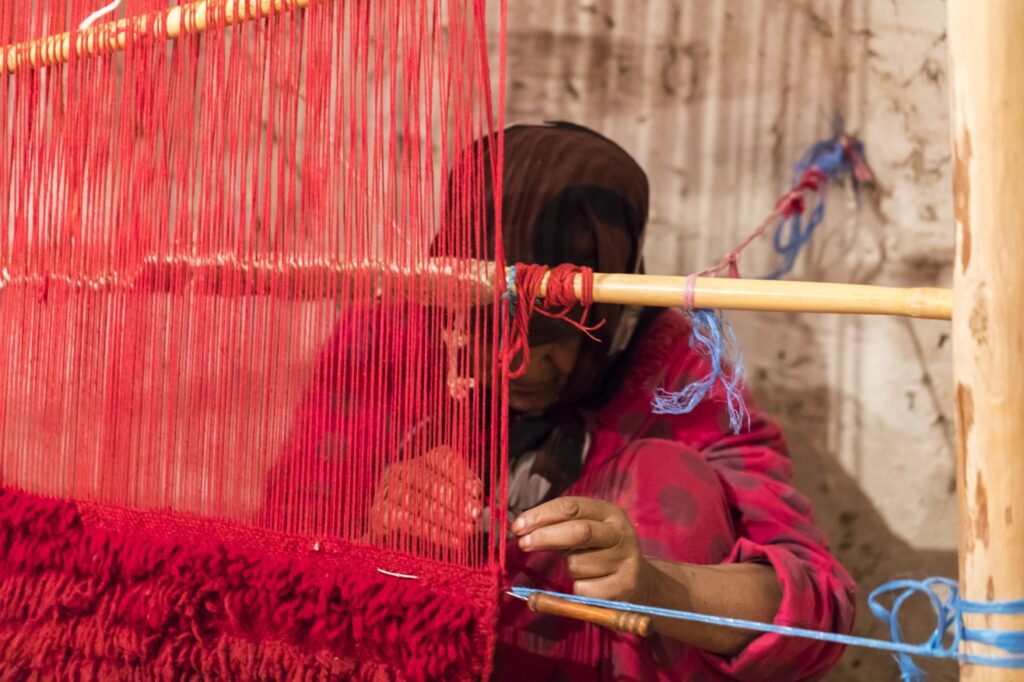
Every Persian Gabbeh rug is more than a floor covering—it is a living narrative woven into wool, each one tells a story. With their vibrant colors, cultural depth, and timeless appeal, Gabbeh rugs continue to captivate collectors and interior designers alike.
6' 6" x 5' 10"
Add to cart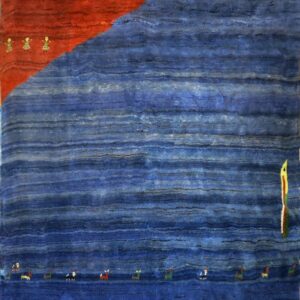
7' 3" x 7' 3"
Add to cart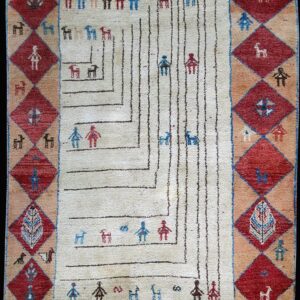
6' 6" x 5' 0"
Add to cart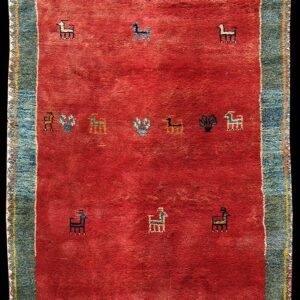
3' 10" x 6' 1"
Add to cart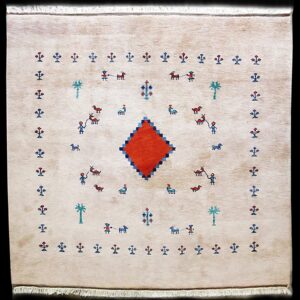
8' 4" x 8' 3"
Add to cart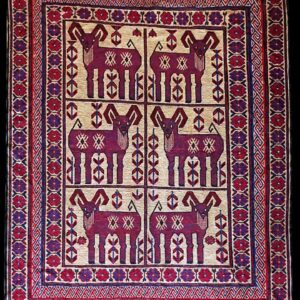
5' 5" x 8' 10"
Add to cart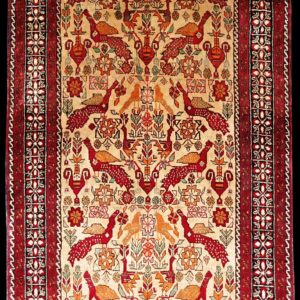
3' 9" x 6' 3"
Read more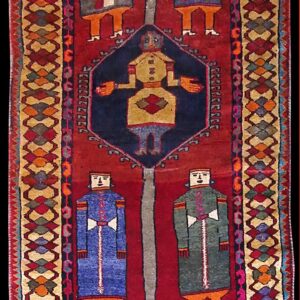
5' 0" x 12' 5"
Add to cart